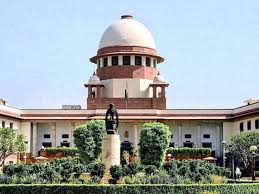
Supreme Court issues nationwide directions to curb digital arrest scams
New Delhi, August 04
The Supreme Court on Tuesday issued a series of nationwide directions to strengthen measures against digital arrest scams, directing the Reserve Bank of India (RBI) to frame a standard operating procedure (SOP) on mule accounts within four weeks and calling for faster implementation of cyber fraud redressal mechanisms across the country.
A bench of Chief Justice of India (CJI) Surya Kant and Justices Joymalya Bagchi and V Mohana passed the directions after taking note of a status report filed by the Indian Cyber Crime Coordination Centre of the Union Ministry of Home.
Among the key directions, the bench directed all States, Union Territories and law enforcement agencies to operationalise, at the earliest, the Grievance Redressal Module and the Money Restoration Module introduced under the Ministry of Home Affairs’ January 2 SOP governing the National Cyber Crime Reporting Portal and Cyber RMS.
States were also asked to undertake public awareness campaigns on digital arrest scams and available reporting and redressal mechanisms.
“The SOP is also to be supplied to the Registrar General of every High Court,” said the apex court.
Registrar Generals of all High Courts were directed to inform courts and adjudicating authorities dealing with bank account freezing cases about these grievance mechanisms so that affected persons may first avail these remedies, without prejudice to their statutory or constitutional rights.
Further, States that are yet to notify State Cyber Crime Coordination Centres have been directed to do so within four weeks and adopt the e-Zero FIR mechanism in consultation with the Indian Cyber Crime Coordination Centre.
Authorities were also instructed to ensure expeditious disposal of bank account freezing cases arising out of cyber-enabled financial fraud.
The bench further directed the Inter-Departmental Committee to consult banks and intermediaries on technological measures to prevent digital arrest scams, facilitate recovery of defrauded amounts, assist investigations and ensure compliance with legal obligations.
The top court also directed the Ministry of Electronics and Information Technology (MeitY), the Department of Telecommunications (DoT) and the Indian Cyber Crime Coordination Centre, in consultation with intermediaries, to examine proposals for introducing time-based restrictions on telecom services for audio and video calls.
The matter will next be heard on September 16, when the court will consider a fresh consolidated status report.
The report is to include State-wise and bank-wise data on grievances registered and disposed of, summary money restoration orders issued and completed, and the amounts restored to victims.
The bench passed the directions while hearing a suo motu case initiated on digital arrest scams.
Last year, the apex court took suo moto cognisance of incidents of digital arrest scams, where fraudsters impersonate law enforcement agencies or judicial authorities to extort money from citizens, particularly senior citizens. (ANI)